We manufacture the actual wet friction discs, sintered bronze plates, paper clutch discs and steel separators that keep CAT, Komatsu, John Deere, Allison and other heavy equipment running. Every batch is run on our own SAE No.2 dynamometers before it leaves the factory floor.
Send OEM part number or dimensions. We return material recommendation, cross-reference and firm price within 2 hours.
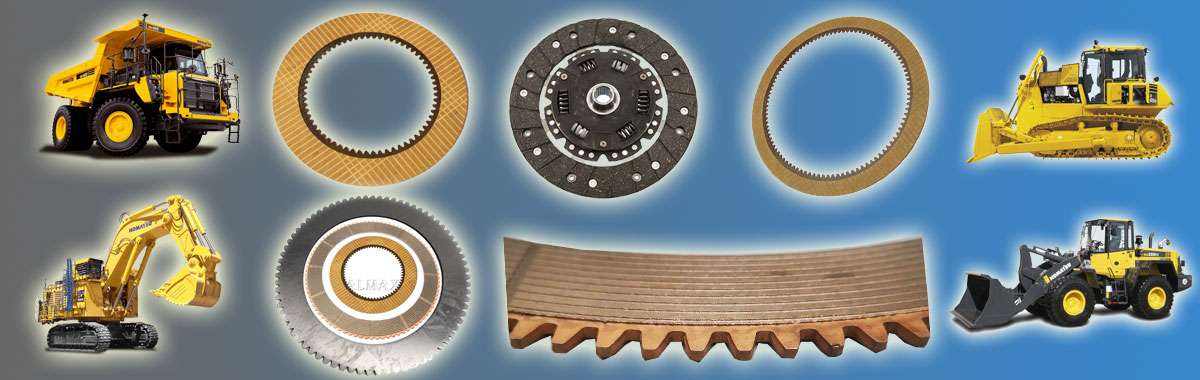
Not stock photos. These are the discs leaving our presses every day — paper, sintered copper, graphite, rubber and steel.
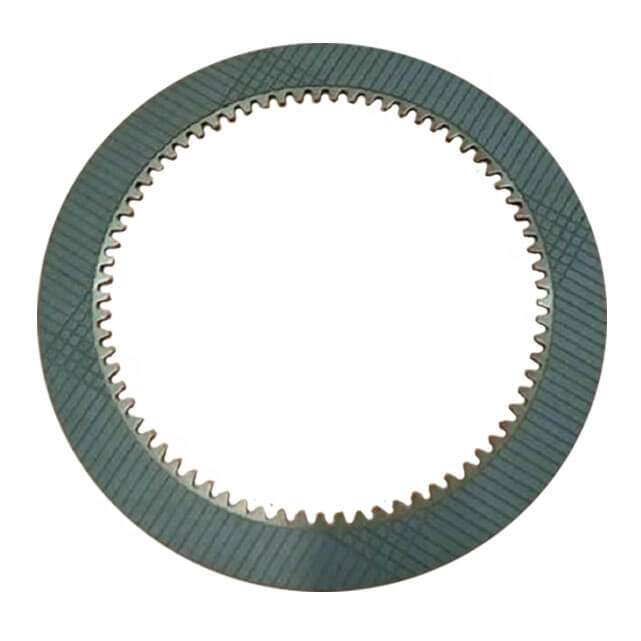
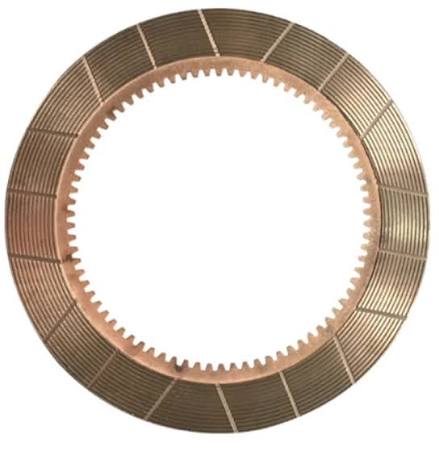
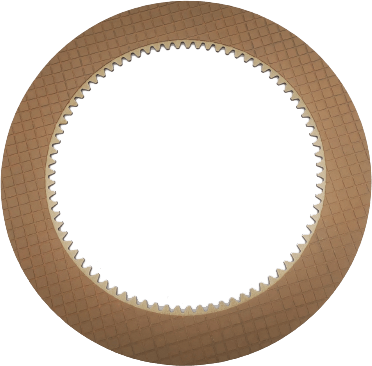

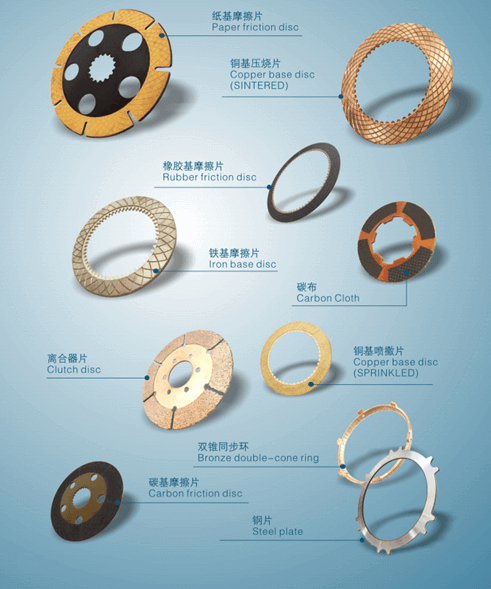
Mining trucks, excavators, dozers, loaders, powershift transmissions and wet multi-disc brakes — the same machines that generate 5 million+ tracked operating hours on our parts.
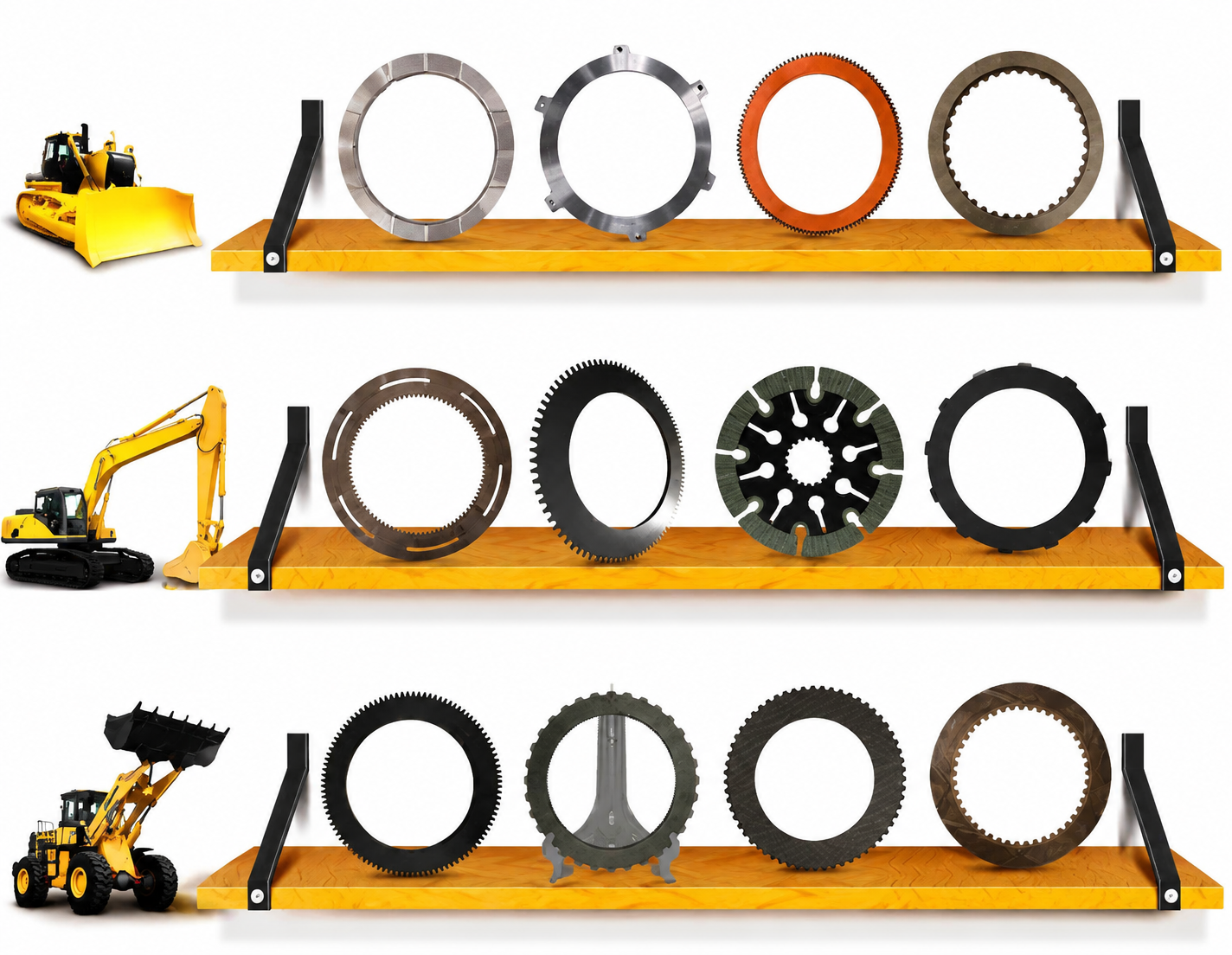
High-energy wet brakes and retarder packs. Sintered bronze preferred for peak temperature >350 °C and continuous downhill energy absorption.
CAT, Komatsu, Allison, Clark. High-density paper remains the dominant material for smooth, chatter-free shifting under frequent direction changes.
Steering clutches, travel brakes and transmission packs. Mixed material stacks are common — we supply matched paper + steel or sintered + steel sets.
Direct Drop-in for Global OEM Platforms
We do not just “cross-reference”. We measure the original groove geometry, facing thickness, spline class and steel hardness, then reproduce the functional envelope so the replacement behaves as the OEM intended.
Numbers that actually matter when you are choosing between paper, sintered bronze, graphite or rubber under real oil temperature and energy density.
| Material | Dynamic μ | Static μ | Peak Temp | Best Used For | Critical Warning |
|---|---|---|---|---|---|
| High-Density Paper | 0.11–0.14 | 0.12–0.15 | ≈220 °C | Powershift, Ag clutches, frequent shift | Never run dry or with wrong viscosity oil |
| Sintered Bronze | 0.06–0.09 | 0.08–0.10 | 400 °C+ | Mining truck brakes, high-energy retarders | Must increase clamp force if replacing paper |
| Graphite / Carbon | 0.09–0.12 | 0.10–0.13 | ≈300 °C | Fast engagement, high thermal cycling | Requires correct synthetic fluid |
| Elastomeric / Rubber | 0.12–0.16 | 0.14–0.18 | ≈180 °C | Marine, smooth industrial drives | Shelf life limited — check resin age |
| Steel Separator | — | — | 500 °C | Mating plate for all friction materials | Must be flat & de-glazed before reuse |
A direct swap without increasing apply pressure typically cuts available torque by 30–40 %. The sintered face also runs hotter under the same slip energy, accelerating wear on the steel plates. Always recalculate clamp force or accept reduced capacity.
Under forced oil flow, radial grooves remove heat ~40 % faster than classic waffle patterns because centrifugal force can flush oil without restriction. Wrong groove on a high-energy application is a more common failure mode than wrong base material.
These are not marketing claims. They are the decision rules used by rebuild shops and fleet engineers who cannot afford “it depends” answers.
Replace when groove depth reaches 25 % of original or absolute remaining depth < 0.4 mm. Oil flow collapses ~80 % at this point; glazing and hot-spotting begin before the facing is completely gone.
Static friction drops 15–20 %. Chatter disappears, but extreme slope holding capacity is reduced. Acceptable for most applications; monitor for creep under maximum load.
Never do it without increasing clamp force. Torque capacity falls 30–40 %. The lower-μ sintered face also transfers more heat into the steel plates, producing scoring within a few hundred hours.
Different compressive moduli cause the stiffest disc to take >90 % of the load. Localized overheating, vibration and rapid burn-up follow. Always run matched sets from one manufacturer.
~90 % of cases are caused by glazed or uneven steel separator plates. If contact area is under 60 %, stick-slip noise appears immediately. Stone or lightly machine the steel faces before assembly.
Radial grooves dissipate heat ~40 % more efficiently than waffle patterns when oil is pumped through the pack. Waffle is fine for moderate energy; radial is mandatory for continuous high-power absorption.
Keep surface temperature <200 °C during bedding. 5–10 second light engagements at ~20 % pressure, 30 cycles maximum. Continuous slip longer than 15 seconds during break-in risks permanent glaze.
0.10–0.15 mm per friction face. A 16-face pack needs 1.6–2.4 mm total free travel. Less → continuous drag heat. More → delayed engagement and shift shock.
Komatsu 714-series paper vs 144-series steering discs share outer dimensions but have different shear strength and groove volume. Interchanging them commonly produces burn-up inside 200 hours.
Paper and sintered bronze: 10+ years sealed. Cork/rubber compounds: resin embrittlement risk after 3 years. Always check manufacture date on rubber-based stock.
Have an OEM part number or a failed pack in front of you? Send it. We will tell you exactly which material and groove geometry belongs there.
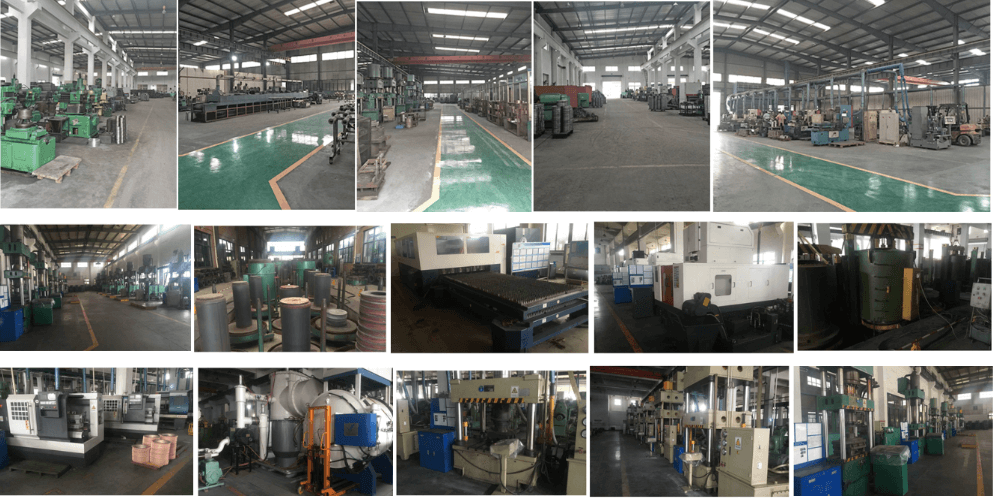
The photos below are our actual production floor: powder metallurgy presses, paper bonding lines, CNC machining of steel cores, heat-treatment and the SAE No.2 dynamometer cells that every production batch must pass before release.
Send the OEM part number, a photo of the failed disc, or the equipment model. Our engineers will return the correct material, groove recommendation, cross-reference and firm pricing — usually within two hours.